






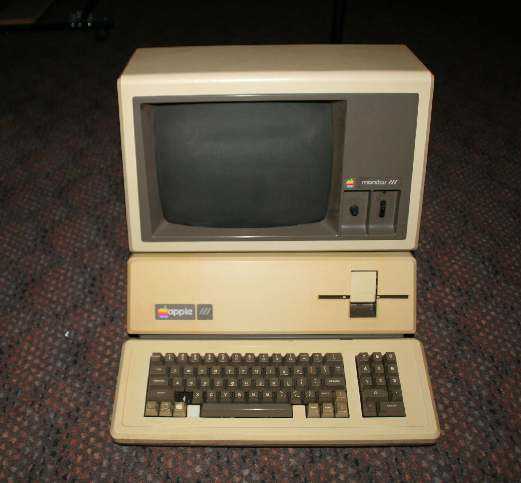



|
NAME |
APPLE III |
|
MANUFACTURER |
Apple |
|
TYPE |
Professional Computer |
|
ORIGIN |
U.S.A. |
|
YEAR |
May 1980 |
|
BUILT IN LANGUAGE |
Business BASIC |
|
KEYBOARD |
Full stroke 74-key with numeric keypad |
|
CPU |
MOS 6502A |
|
SPEED |
2 MHz |
|
RAM |
128 KB (up to 512 KB) |
|
ROM |
16 KB |
|
TEXT MODES |
40 or 80 chars x 24 lines |
|
GRAPHIC MODES |
40 x 40-48 (16 colors), 280 x 160-192 (6 colors), 560 x 160-192 (2 colors) |
|
COLORS |
16 maximum |
|
SOUND |
One channel 7 octaves |
|
SIZE / WEIGHT |
44.4 (W) x 46.2 (D) x 12.2 (H) cm |
|
I/O PORTS |
Monitor, Internal Slots (4), RS-232, Floppy disk port |
|
BUILT IN MEDIA |
One built in 140 KB 5.25'' disk-drive |
|
OS |
SOS |
|
POWER SUPPLY |
Built-in power supply unit |
|
PERIPHERALS |
4 expansion slots, 5 MB Profile hard disk unit, dual floppy disc unit, color video card, provision for extra memory |
|
PRICE |
$1995 |
|
Apple III
|
|
Apple III |
|
problems, namely, the horrible case design. It caused the internal temperature to get so hot that the motherboard
would warp and some of the socketed chips would become unseated. To remedy this, Apple told people to literally
pick up the computer several centimeters off the desk and drop it! It was a miserable flop in the marketplace.
|
